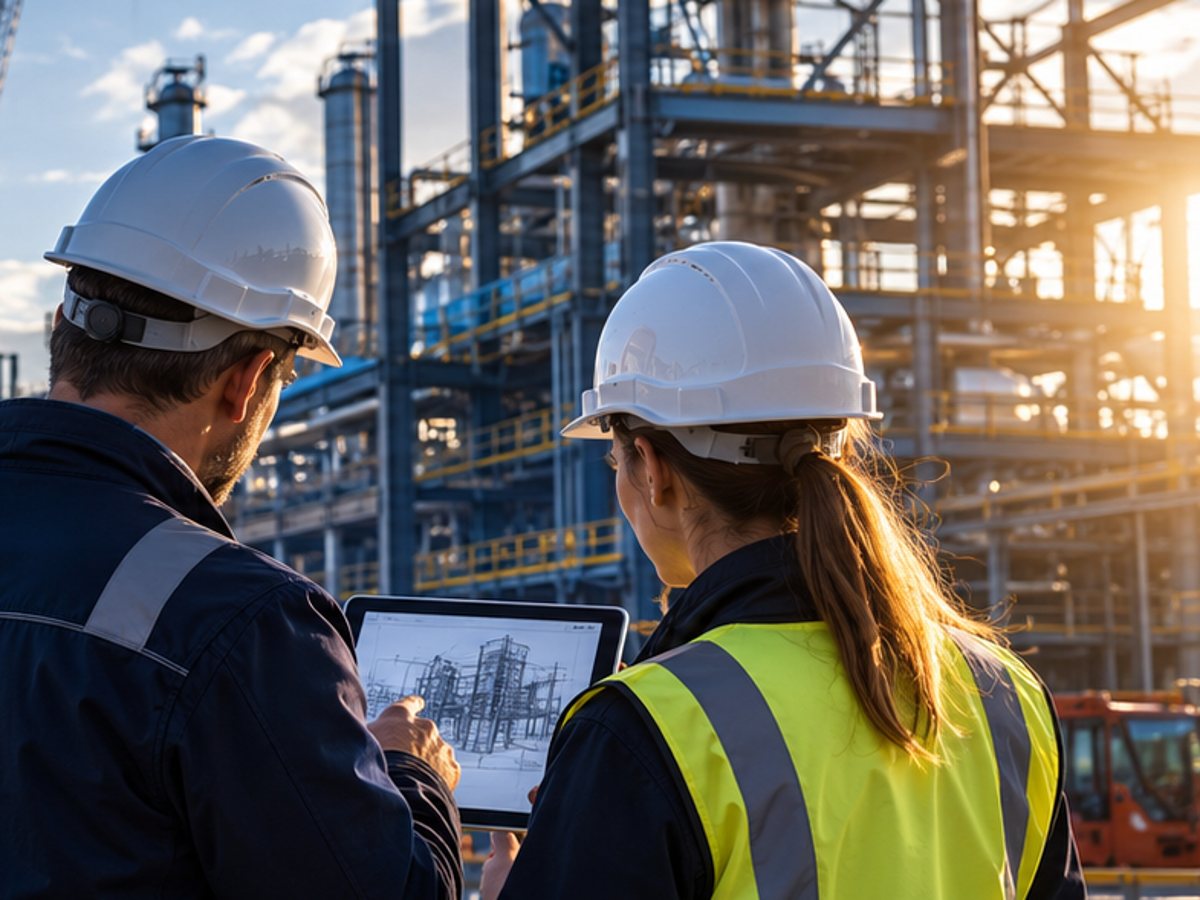
Engineering: The Technical Core of Industrial Projects
Engineering is one of the fundamental components in the delivery of industrial plants, infrastructure and complex technological systems.
From preliminary design through to detailed construction design, engineering activities help turn the client’s requirements into technically feasible solutions.
Project quality depends on the ability to combine specialist knowledge, working methods and technological tools.
In highly complex environments, access to professionals with relevant experience is a decisive factor.
Multidisciplinary Design
Industrial projects frequently require the integration of several disciplines.
Civil and structural engineering addresses the works and structures needed to build industrial facilities.
Mechanical and piping engineering covers the design of equipment, pipework and connection systems.
Electrical engineering, instrumentation and automation contribute to power distribution, process control and plant operation.
Process engineering defines operating conditions and the main functional characteristics of production systems.
Coordination among these disciplines helps identify clashes, improve design consistency and reduce the risk of changes during construction.
Specialist Expertise as a Competitive Advantage
Not every project requires the same knowledge.
An energy facility, an industrial structure and a railway infrastructure project have different technical requirements, even when they share certain management methods.
For this reason, experience gained in specific industrial sectors can be particularly valuable.
Qualified professionals can interpret technical requirements, apply relevant standards, assess alternative solutions and collaborate with other project functions.
Specialisation helps improve the reliability of design decisions and the ability to address complex problems.
Technological Innovation and Digital Tools
The development of engineering is closely linked to the use of advanced digital tools.
CAD software, three-dimensional modelling, BIM methodologies and document management systems make it possible to develop and share technical information in a more structured way.
These tools support coordination between disciplines and can help identify clashes before construction begins.
However, technology does not replace professional experience.
Correctly interpreting results, checking solutions and assessing operational constraints still depend on specialist expertise.
Engineering and Construction: An Essential Connection
Effective design must also take account of real construction, installation and maintenance conditions.
Dialogue between Engineering and Construction makes it possible to assess accessibility, work sequences, material availability and potential installation issues.
Integrating designers and site professionals can reduce rework and promote greater continuity between technical development and execution.
This connection is particularly important in multidisciplinary projects and work on existing facilities.
Key Engineering Roles
Among the professionals most frequently sought for industrial projects are:
- Civil and Structural Engineers.
- Mechanical Engineers and Piping Engineers.
- Electrical Engineers.
- Instrumentation & Control Engineers.
- Process Engineers.
- Automation Engineers.
- Project Engineers.
- Design Engineers and CAD/BIM Specialists.
Each role contributes specific skills, but the overall result depends on collaboration across disciplines.
Managing Peaks in Design Workload
Technical staffing needs can vary considerably over the lifecycle of a contract.
During periods of intensive design activity, companies may need to bring in specialists with targeted skills quickly.
Using recruitment and selection services and technical consultancy allows companies to assess solutions suited to the workload and expected duration of activities.
Accurately defining the required skills makes it easier to identify suitable professionals.
How IMS Management Supports Engineering
IMS Management supports companies in recruiting and selecting engineers, designers and specialised technical professionals.
IMS focuses on identifying skills aligned with project requirements, taking into account professional experience, technical discipline, operational context and availability.
The aim is to help companies integrate the resources they need to address the different project phases.
Conclusions
Engineering is much more than a collection of technical drawings and documents.
It is a process that integrates knowledge, experience, innovation and the ability to collaborate.
In complex industrial projects, investing in specialist expertise means improving solution quality, reducing critical issues and strengthening companies’ delivery capabilities.
IMS Management Team